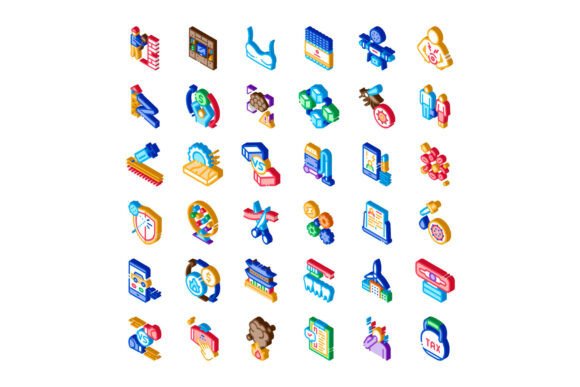
Collection of Business, Technology, Fina: A Practical Evaluation for Designers and Communicators
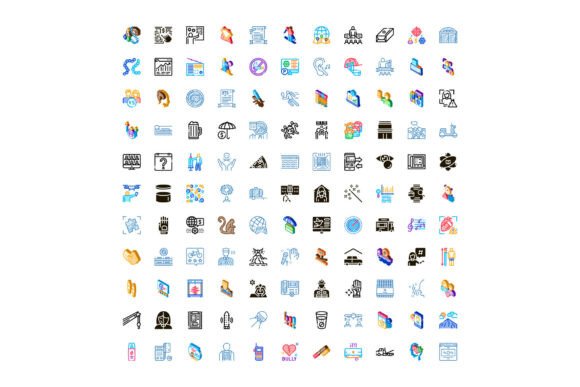
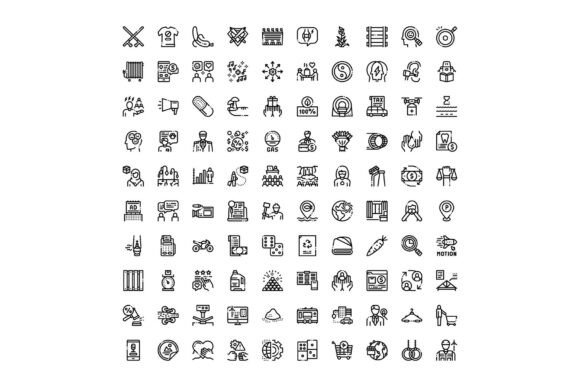
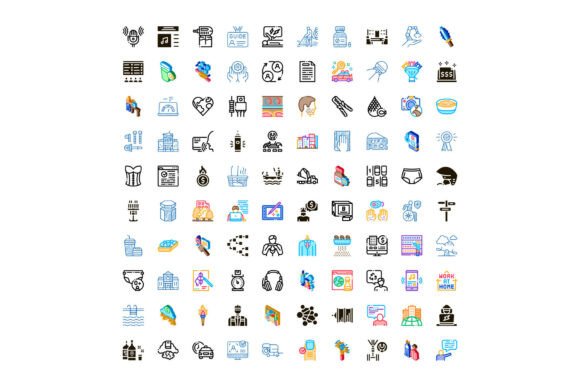
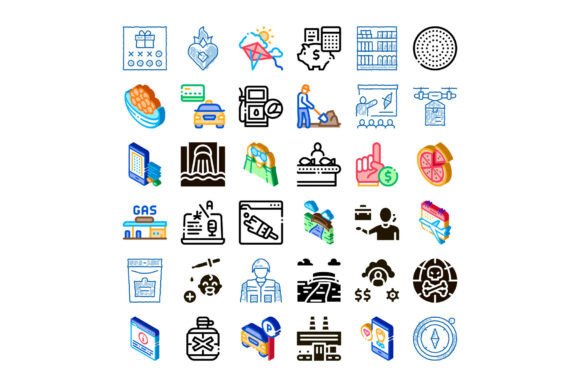
The Collection of Business, Technology, Fina is a curated set of flat, doodle, and isometric icons designed to support visual communication across business, technology, finance, logistics, planning, strategy, lifestyle, and global themes. It is not a single application or platform but a downloadable asset library intended for use in UI design, infographics, presentations, dashboards, and digital documentation tools. The collection emphasizes visual consistency across styles—offering multiple rendering approaches (flat for clarity, doodle for approachability, isometric for spatial context)—while maintaining thematic coherence.
Designers, content strategists, educators, and product teams often seek icon sets that balance expressiveness with usability. The Collection of Business, Technology, Fina responds to this need by grouping icons around functional domains rather than abstract aesthetics. For example, logistics-related icons include warehouse silhouettes, delivery trucks, and route maps; communication assets feature chat bubbles, signal bars, and video call interfaces; and global topics span flags, globe illustrations, and cross-border exchange symbols. This domain-aligned organization supports faster asset discovery during production workflows.
One reason professionals consider this collection is its stylistic range. Flat icons suit clean, modern interfaces where speed of recognition matters. Doodle-style variants introduce warmth and informality—useful in internal training materials or user onboarding flows targeting non-technical audiences. Isometric icons provide subtle depth, making them effective in explainer graphics or interactive dashboards where spatial relationships (e.g., supply chain layers or system architecture) benefit from three-dimensional cues. Having all three interpretations available within one consistent naming and categorization system reduces time spent sourcing, aligning, or redrawing assets.
However, the value of the Collection of Business, Technology, Fina depends on alignment with specific project constraints. Its strength lies in breadth and thematic cohesion—not exhaustive coverage of every sub-niche. A fintech startup building a real-time risk dashboard may find the finance and planning icons highly relevant, especially if they prioritize rapid prototyping over pixel-perfect custom illustration. In contrast, a healthcare SaaS team needing HIPAA-compliant medical device icons would likely require supplementary or specialized assets, as the collection does not extend into clinical or regulatory domains.
Users should also consider technical integration. The collection is typically delivered as SVG and PNG files, compatible with most design tools (Figma, Adobe XD, Sketch) and development environments. SVG support enables responsive scaling and CSS-based color adjustments—valuable for maintaining brand consistency across light/dark modes. Yet, unlike some icon libraries tied to design systems (e.g., Material Icons or IBM Carbon), it lacks built-in React or Vue components, documentation for accessibility attributes (such as aria-label guidance), or automated token mapping. Teams relying heavily on code-first workflows may need to invest additional effort in implementation and testing.
Licensing is another practical factor. Most versions of the Collection of Business, Technology, Fina operate under royalty-free licenses permitting commercial use, but restrictions often apply to redistribution or resale of the icons as part of a new asset pack. Users embedding icons into white-labeled software or client-facing applications should verify license terms—particularly whether attribution is required and whether modifications (e.g., recoloring or combining elements) are permitted without additional permissions.
The collection tends to be a strong fit when: the project timeline favors ready-to-use assets over custom illustration; the audience spans both technical and non-technical stakeholders; visual tone must adapt across contexts (e.g., a corporate report using flat icons alongside an internal workshop deck using doodle variants); and the subject matter falls squarely within its defined domains—business operations, digital infrastructure, financial modeling, logistical coordination, strategic frameworks, or culturally aware global messaging.
Alternatives may be preferable in certain cases. For teams prioritizing strict accessibility compliance, libraries with baked-in semantic HTML examples and WCAG-tested contrast ratios (like Font Awesome Pro’s accessible icon patterns) offer more out-of-the-box assurance. When scalability across dozens of products is essential, a fully integrated design system with auto-generated icon tokens and versioned releases may reduce long-term maintenance overhead. Similarly, projects requiring high-fidelity realism—or animation-ready vector structures—may find isometric icons limiting compared to layered, rig-ready illustrations.
Practical decision-making starts with scoping actual usage. Before selecting the Collection of Business, Technology, Fina, review your upcoming six months of deliverables. List the top five recurring visual needs: Are they centered on workflow diagrams? Data visualization legends? Mobile app navigation? Cross-departmental process maps? If at least three align with logistics, strategy, finance, or global collaboration themes—and if stylistic flexibility (flat/doodle/isometric) matches your communication goals—the collection is likely efficient to adopt.
Also assess team capacity. Do designers have time to manually adjust stroke weights or export variants per platform? Does your developer team prefer SVG sprites or icon fonts? Can your documentation process accommodate manual alt-text assignment per icon instance? These operational details influence whether the collection accelerates work or introduces friction.
Finally, consider longevity. Icon trends evolve, but foundational concepts—like “cloud,” “network,” “timeline,” or “exchange”—remain stable. The Collection of Business, Technology, Fina avoids overly trendy metaphors (e.g., crypto-specific glyphs or ephemeral UI patterns), favoring enduring representations. That makes it reasonably future-proof for mid-term projects—though users should still plan for periodic visual audits, especially if brand guidelines shift toward minimalism or increased inclusivity in representation.
In summary, the Collection of Business, Technology, Fina serves best as a pragmatic, multi-style reference toolkit—not a universal solution. Its utility emerges when evaluated against concrete tasks, audience needs, technical constraints, and team capabilities—not abstract ideals of comprehensiveness or novelty. For professionals weighing visual resource options, clarity about *how* and *where* icons will be applied matters more than sheer quantity. Matching style variety to communication intent, verifying licensing scope, and aligning with existing tooling are more decisive factors than aesthetic preference alone.