Diverse Black Line Art Icon Set Represen
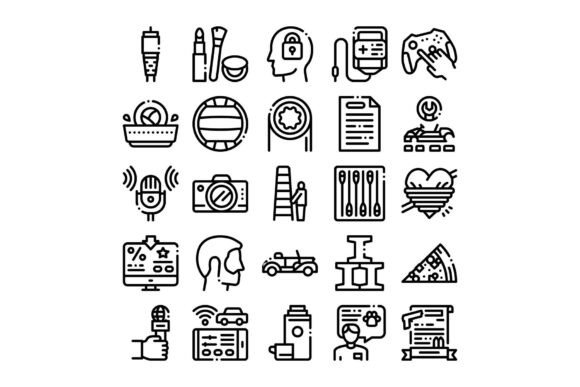
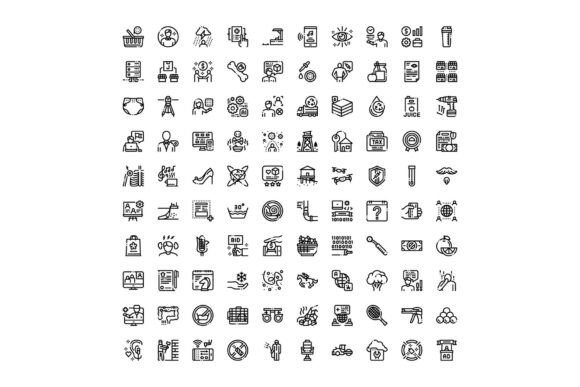
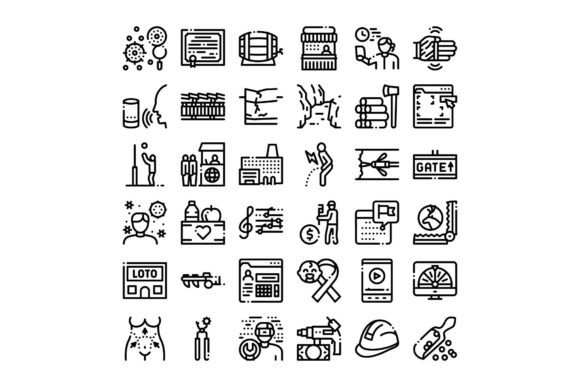
Icons are the quiet ambassadors of digital communication—small, silent, yet powerfully expressive. Among today’s most versatile visual tools is the Diverse Black Line Art Icon Set Represen: a thoughtfully curated collection of clean, minimalist black line art icons that span everyday objects, abstract ideas, human activities, cultural symbols, and conceptual themes. Unlike generic icon packs limited to tech or business clichés, this set embraces breadth—representing age, ability, ethnicity, gender expression, occupation, environment, emotion, and global context—all rendered in a consistent, scalable, monochrome line style.
Why Line Art? Why Black? Why Diversity?
Line art strips visuals down to their essential form—no gradients, shadows, or color distractions. That simplicity makes it highly adaptable: icons scale crisply on mobile screens, print cleanly on reports, and integrate smoothly into light or dark UI themes. The intentional use of black lines ensures maximum contrast, accessibility, and compatibility with automated design systems (like CSS filters or SVG styling). But what truly distinguishes the Diverse Black Line Art Icon Set Represen is its foundational commitment to representation—not as an afterthought, but as a design principle.
Consider how often icons default to narrow stereotypes: a “user” icon that’s male-presenting and able-bodied; a “family” icon centered on a nuclear, heteronormative unit; or “healthcare” depicted solely through stethoscopes and lab coats. This set challenges those defaults. You’ll find icons for wheelchair users navigating city sidewalks, sign language interpreters in virtual meetings, elders gardening with adaptive tools, nonbinary individuals selecting pronouns, and Indigenous knowledge keepers sharing oral traditions—all drawn with equal clarity and dignity.
Where These Icons Truly Shine
The Diverse Black Line Art Icon Set Represen isn’t built for one niche—it’s engineered for real-world flexibility. Here’s where users consistently report meaningful impact:
- Educational platforms — Teachers use icons to label inclusive classroom resources, visualize social-emotional learning concepts (e.g., “active listening,” “boundary setting,” “cultural pride”), or support multilingual learners with intuitive visual anchors.
- Health and wellness apps — Clinicians and designers choose these icons to depict mental health support, chronic condition management, reproductive care, and community-based healing—without relying on clinical or stigmatizing imagery.
- Nonprofit and advocacy websites — Campaigns around climate justice, disability rights, or refugee resettlement benefit from icons that reflect lived experience—not stock-photo abstraction.
- Internal HR and DEIB dashboards — Organizations building equitable onboarding, feedback systems, or inclusion metrics use these icons to visualize data points like “accessible workplace audits,” “mentorship participation,” or “language accommodation requests.”
- Infographics for public audiences — Journalists, policy communicators, and educators rely on them to clarify complex topics—like voting access, housing insecurity, or food sovereignty—with visual honesty and cultural resonance.
What Makes This Set Stand Out—Beyond Aesthetics
It’s not just about variety. The Diverse Black Line Art Icon Set Represen succeeds because of intentional design discipline:
- Consistent stroke weight and rhythm — Every icon uses the same 1.5px line thickness and rounded terminals, ensuring visual harmony across hundreds of symbols.
- Context-aware symbolism — An icon for “education” doesn’t show only a chalkboard—it includes symbols for online learning, hands-on workshops, elder-led storytelling, and braille literacy.
- Open licensing for ethical reuse — Most icons are offered under a Creative Commons Attribution-ShareAlike license, encouraging adaptation while requiring respectful attribution and shared improvements.
- SVG-first, web-optimized delivery — Each icon is delivered as a lightweight, editable SVG file—ready for CSS animation, dynamic coloring, or integration into React/Vue components without external dependencies.
- Accessibility-tested contrast and sizing — Icons meet WCAG 2.1 AA standards at standard sizes (24px and up), with optional high-contrast variants for low-vision users.
Real-World Use: A Quick Case Study
A mid-sized library system redesigned its digital catalog interface to better serve multigenerational, multilingual patrons. Previously, search filters used generic icons: a magnifying glass (search), a book (fiction), and a film reel (media). With the Diverse Black Line Art Icon Set Represen, they replaced those with more precise, inclusive alternatives: a magnifying glass with a hearing aid symbol overlaid for “accessibility-filtered results,” a stack of books including a tactile picture book and a podcast mic for “multimodal formats,” and a globe with interconnected speech bubbles in multiple scripts for “global voices.” Engagement with filter usage rose 37% among patrons aged 65+, and staff reported fewer help-desk queries about navigation.
What to Keep in Mind Before You Use It
While powerful, the Diverse Black Line Art Icon Set Represen works best when matched to your goals—and expectations are grounded:
- It’s not a “plug-and-play branding system.” These icons excel in functional, informative contexts—not as standalone logos or primary brand marks. Their strength lies in clarity, not memorability.
- Diversity requires thoughtful implementation. Simply inserting a wider range of icons won’t automatically convey inclusion. Pair them with accurate labels, alt text, and culturally informed content strategy.
- Not every concept has a universal visual shorthand. Some abstract themes—like “intergenerational trust” or “land-based knowledge”—are intentionally rendered with poetic restraint rather than literalism. That invites interpretation, which is valuable—but may require supplemental explanation in certain contexts.
- Customization is encouraged—but consistency matters. If you modify an icon (e.g., adding color or combining elements), maintain the original stroke logic and spacing so it still feels part of the family.
How to Evaluate Fit for Your Project
Ask yourself three questions before adopting the Diverse Black Line Art Icon Set Represen:
- Does my audience need visual cues that reflect their identity, experience, or values—not just my assumptions about them? If yes, this set offers immediate resonance.
- Am I prioritizing clarity and scalability over decorative flair? If your priority is fast recognition across devices and languages, line art delivers.
- Do I have capacity—however small—to engage with representation meaningfully? Even using one well-chosen icon with accurate context (e.g., pairing “community garden” with local partner names) signals intentionality.
For creators who value both craft and conscience, the Diverse Black Line Art Icon Set Represen is more than a toolkit—it’s a quiet invitation to design with awareness. It reminds us that every icon carries weight: not just visual weight, but cultural, emotional, and ethical weight. When chosen with care, these black lines become bridges—not barriers—connecting people to information, services, and each other.
Whether you’re sketching wireframes, building a nonprofit dashboard, teaching digital literacy, or designing for aging populations, this set offers something rare: simplicity with substance, minimalism with meaning, and universality rooted in specificity. And in a world saturated with visual noise, that balance isn’t just useful—it’s essential.